
Ultra Reverse Osmosis Water Filter System
View your basket contents
Checkout from the store

Water Education  

Learning Center Categories:

Water And Health

Learn About Water Quality

Water Can Heal!

Contaminants Fact Sheets

Top Water News


Did you know?
Reverse osmosis is the finest water filtration method known. This process will allow the removal of particles as small as ions from a solution. It is used to purify water and remove salts and other impurities in order to improve the color, taste or properties of the fluid. R.O. uses a membrane that is semi-permeable, allowing the fluid that is being purified to pass through it, while rejecting other ions and contaminants from passing
. This technology uses a process known as crossflow to allow the r.o. membrane to continually clean itself. This is the reason of why an r.o. element can last many years before clogging or need replacement. This water purification process requires a driving force to push the fluid through the membrane, and the most common force is household water pressure or pressure from a booster pump. The higher the pressure, the larger the driving force and efficiency.


Water Can Heal

Did You Know?
Water can prevent and alleviate many of our symptoms

Water and Cough and Cold
Stomach Problems
Allergies and Asthma
Slight Stroke
Urinary/Kidney stones
Dry eyes and skin
High cholesterol/blood pressure
Water and Gout
Water and Constipation
Water can help Insomnia
Water and Cancer
Water and Prostate problems
Water and hair loss

Water and depression/stress/anxiety
Water and food poisoning
Water and headache
Water and osteoporosis
Water and gallstones
Water and fever
Water and heat stroke
Water and athlete's foot
Water and hepatitis
Water and hyperthyroidism
Drinking water to cure internal/ external infections

Water and arthritis
Water and Alzheimer's disease/other aging effects
Water and bronchitis/pneumonia
Water and menopause
Water and premenstrual syndrome/pms
Water and hydration/muscle cramping
Water and colon health
Drinking Water and diabetes
More Topic...


Water Hardness and kidney stones.

The key role of water in urinary stone formation is generally accepted by the public; nevertheless, only the quantitative facet of this idea is justified - insufficient intake of water and other liquids, i.e. permanent dehydration, even if slight, surely increases the risk for urolithiasis of all types. On the other hand, qualitative assessment shows that the content of water minerals, more precisely of magnesium and calcium, plays a less important role. Urinary stone formation is a process involving multiple factors, i.e. not only intake of liquids, but also genetic predisposition, eating habits, climatic and social conditions, gender, etc.
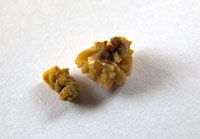
Several studies documented that higher water hardness is associated with higher incidence of urolithiasis among the population supplied with such water; in contrast, more studies found softer water to be associated with higher risk for urolithiasis. Nevertheless, most recent epidemiological studies explain those controversial results by differences in the study designs and say that water hardness ranging between the values commonly reported for drinking water is not a significant factor in urolithiasis (Singh et al, 1993; Ripa et al, 1995; Kohri et al, 1993;Kohri et al, 1989).

Any correlation between water hardness, or the drinking water calcium or 14 magnesium level, and the incidence of urolithiasis was not found in the last vast USA epidemiological study with 3270 patients (Schwartz et al, 2002). The quoted Japanese studies did not found that the water calcium or magnesium levels alone had an effect on the incidence of urolithiasis but did found that the Mg to Ca ratio had: one study reported the lower Mg to Ca ratio to be associated with a higher risk for urolithiasis regardless of type and the incidence of urolithiase to correlate with the type of geological subsoil (Kohri et al, 1989) and another study found correlation between the higher Mg to Ca ratio and higher incidence of infectious phosphate urolithiasis (Kohri et al, 1993).

Many experimental studies document that higher water hardness does not pose any risk for urolithiasis (which is not true of extreme water hardness beyond the range to be considered for drinking water - see below) and confirm concordantly that intake of calcium rich water (or magnesium rich water) reduces risk for calcium oxalate urolithiasis (Rodgers, 1997; Rodgers, 1998; Caudarella et al, 1998; Marangella et al, 1996; Gutenbrunner et al, 1989; Ackermann et al, 1988; Sommariva et al, 1987). Intake of such water is associated with higher urinary calcium elimination and at the same time with lower urinary oxalate elimination probably due to oxalate bond to calcium in the intestine with subsequent prevention of oxalate absorption and enhanced oxalate elimination through feces.

Nevertheless, these conclusions do not apply to patients after urinary stone removal. Isolated experiments suggested that intake of softer drinking water resulted in a lower rate of recurrent urolithiasis (Bellizzi et al, 1999; Coen et al, 2001; Di Silverio et al, 2000) but admitted at the same time that the results could not be generalized and depended on multiple factors, e.g. whether water was given between meals as in one of the studies above or during meals when, in contrast, harder water intake may have been associated with a lower rate of recurrences (Bellizzi et al, 1999). Genetic predispositions and eating habits may play a relevant role in this regard. High hardness (>5 mmol/l), which is not typical of drinking water, may be associated with higher risk for urinary and salivary stone formation as documented by a Russian epidemiological study (Mudryi, 1999).

The author says that a long-term intake of drinking water harder than 5 mmol/l results in a higher local blood supply in the kidneys and subsequent adaptation of the filtration and resorption processes in the kidney. This is believed to be protective reaction of the human body, which may lead, if the conditions persist, to alteration of the body's regulatory system with possible subsequent development of urolithiasis and hypertension. Risk for urolithiasis was also associated with intake of water of a hardness of 10.5 mmol/l (Ca 370 mg/l) as documented by the already quoted Italian study (Coen et al, 2001). Harmful effects of hard water No evidence is available to document harm to human health from harder drinking water.

Perhaps only a high magnesium content (hundreds of mg/l) coupled with a high sulphate content may cause diarrhoea. Nevertheless, such cases are rather rare; other harmful health 15 effects due to high water hardness (e.g. the effects on the eliminatory system as mentioned above) were observed in waters rich in dissolved solids (above 1000 mg/l) showing mineral levels, which are not typical of most drinking waters. In the areas of the Tula region supplied with drinking water harder than 5 mmol/l, higher incidence rates of cholelithiasis, urolithiasis, arthrosis and arthropathies as compared with those supplied with softer water were reported (Muzalevskaya et al, 1993). Another epidemiological study carried out in the Tambov region found hard water (more than 4-5 mmol/l) to be possible cause of higher incidence rates of some diseases including cancer (Golubev et al, 1994). The results of the studies concerning the relationship between water hardness and tumors are discordant, but most of them are supportive of protective effect of harder water.


Click to see details of Ultra Reverse Osmosis Water Filter System !
Healthy and Convenient! Our Featured Drinking Water Filter System

More Topics on Water & Medical

Water and children's constipation
Water and sore throats
Water and back pain
Water and osteoarthritis
Water and teeth

Water and child urinary problem
Water and Prostate cancer
Water and heartburn
Water and kidney stones
Water and inner cooling system
Water and muscle tone
Water and capillary action
Water and rashes

Although hard water is not a health risk, the benefits of consuming softened, treated water far outweighs any potential benefits of consuming hard, untreated water. By using hard water softeners, magnetic water softeners, or water conditioners, these devices can increase the life of toilet flushing units by 70% and water tap by 40%. Water will no longer coats inside of the tea or coffee pots, and clogs up and ruin water heaters. You will not need as much as soap and synthetic detergents for laundry and washing. In addition, when using soap on the body in hard water can cause formation of a scum or curd, this curd or scum remains on the skin even after rinsing, clogging pores, and coating body hair; which can serve as a medium for bacterial growth, causing nappy rash, minor skin irritation and skin that looks dry and continually itches. To find the best price on residential water softeners, please check our electronic water softener for more information.

= Products of Superior Performance and Dependability APEC Reverse Osmosis Made In USA
Reverse osmosis water filters/ softeners
Reverse Osmosis Products

Replacement Filters & Parts
Shower Filters and Bath Balls
Whole House Water Filters
Saltless Water Softeners
Classic Water Softeners

Electronic Water Softeners
F.A.Q.s
Reverse Osmosis Technical Center
Learn the Truths About Our Drinking Water
Contaminant Fact Sheets
Water Can Cure Diseases
Water And Our Health
Top Water News

Contact APEC
Current Promotions
Our Reviews
About APEC
Refer & Get Cash
Warranty
APEC Reverse Osmosis Water Filters