




DOMESTIC WATER SOFTENER / CONDITIONING EQUIPMENT

Most manufacturers make two basic types of water softeners. These can be classified as fully automatic and demand-initiated regeneration models.
A fully automatic softener is usually equipped with a timer that automatically initiates every step in the regeneration process. The regenerating of the unit is usually done at night when water usage is at a minimum.
With a demand-initiated regeneration unit all operations, including bypass (of hard or soft water depending on design) and return to service are initiated and performed automatically in response to the demand for treated water. Salt storage shall be sufficient for multiple regenerations.
Salt for regeneration may be put in the softener in any of several different ways depending on the type of equipment. With some models, salt is placed directly in the unit through an opening at the top, at the proper time during the regeneration.
In other units the salt brine form may be stored in a separate closed tank. When needed, this brine is forced into the softener by fresh water under pressure. Brine can also be stored in a non-pressure container and be drawn into the softener by suction, to feed the proper amount of brine into the softener tank. Water softeners are rated in terms of grains of capacity. This capacity refers to the ability of the unit to remove the stated number of grains of hardness from a supply of water. The capacity of a unit depends on the amount of ion exchanger in the softener, the amount of salt used to regenerate it, plus a variety of other design factors such as regeneration flow rates, etc.
The ion exchange process outlined up to this point meets the requirements for the preparation of fully soft water for home needs.
Industrial demands, on the other hand, often call for water that is completely free of mineral contaminants. For this reason, the treatment of the water must be carried further than is necessary for home needs. (--> Next)
Many cities across the U.S. have started to ban traditional water softeners from their communities even though they have hard water. These ion-exchange systems use large amounts of salt, which is then flushed down the drain and harms the environment. Sanitary departments are then forced to build treatment plants to remove the salt and they, in turn, pass these costs down to the consumer through higher monthly water bills. Thus many cities have decided that it is not worth the cost and effort and have banned the use of salt-based water softeners altogether.
Salt-free water softeners are a better solution. These systems use catalytic conversion to safely soften water without the use of salts and are much better for our environment and local waterways. Salt-free water softeners deliver all the benefits of traditional water softeners and are approved for use by every community.
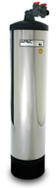
Water Softeners
No Salt, No Mess, No Scale - No Problem.
According to recent news and reports, most tap and well water in the U.S. are not safe for drinking due to heavy industrial and environmental pollution. Toxic bacteria, chemicals, and heavy metals routinely penetrate and pollute our natural water sources making people sick while exposing them to long-term health consequences such as liver damage, cancer, and other serious conditions. We have reached the point where all sources of our drinking water, including municipal water systems, wells, lakes, rivers, and even glaciers, contain some level of contamination. Even some brands of bottled water have been found to contain high levels of contaminants in addition to plastic chemicals leaching from the bottle.
A good water filtration system installed in your home is the only way to proactively monitor and ensure the quality and safety of your drinking water. Reverse osmosis water purification systems can remove 90-99% of all contaminants from the city and well water to deliver healthy drinking water for you and your family.
