



- The TRUTH About America's Water
- Water Pollutants that Cause Illness
- Are Minerals in Water Important for Health?
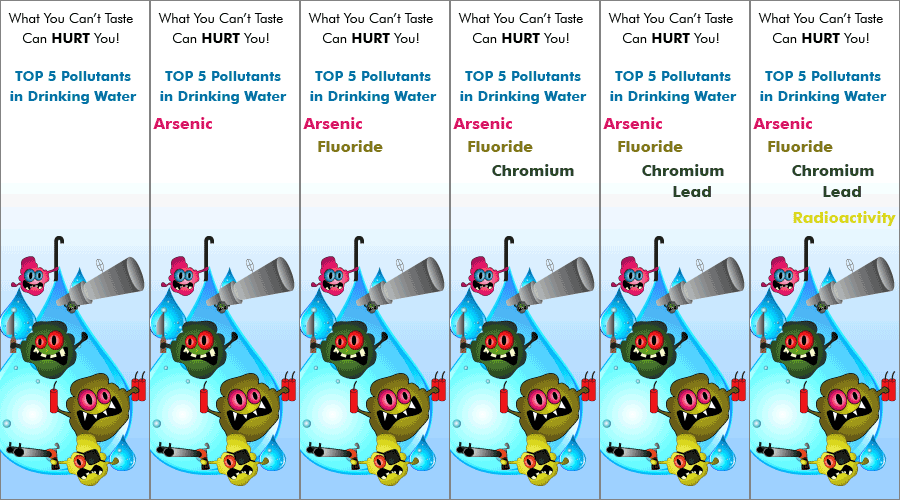
- Top 5 Drinking Water Contaminants
- Do I Need a Whole House Water Filter?

HOW FAR SHOULD PERSONAL DRINKING WATER WELLS BE SITED FROM POTENTIAL POLLUTION SOURCES - such as a lagoon, landfill, and storage areas for petroleum products, manure, commercial fertilizers or hazardous chemicals?
A drinking water well should be sited as far away as possible from sources of potential pollution or contamination of groundwater for obvious reasons. Some states and/or counties require that a water well be located a specified "minimum horizontal distance" from a particular potential pollution or contamination source. But that's just the beginning for the considerations to be taken into account.
Most people living in rural areas with limited industry expect their home well water quality to be excellent. When buying a home, many people take for granted that their water will be clear and safe to drink. Yet, in many areas poor water quality is common. High levels of iron, manganese, and other naturally occurring metals can make the water unusable without costly treatment. Many other contaminants, some of which are introduced by human activity and others that occur naturally, can cause significant health problems. The bottom line is that your health, your family's health, and the value of your home all depend on a safe, high quality water supply.
Ground water is found beneath the land's surface. Most ground water used for drinking is taken from fractured bedrock or sand and gravel deposits. Contrary to popular belief, ground water is rarely found in underground rivers or lakes. Ground water tends to move more like water soaking through a sponge than water flowing down a river. Ground water moves slowly from areas of higher elevation to areas of lower elevation. In the eastern United States, about 70 percent of the flow of perennial streams comes from ground water discharge.
The volume of ground water in an area changes seasonally and varies from year to year, depending upon the amount of precipitation and how much water is removed by plants. The water you drink probably entered the ground less than a mile from your well. So, the activities near your own home can have a major impact on your well. For instance, petroleum leaking from a home heating oil tank may percolate down to the top of the water table. Once there, the oil will flow with the ground water. If your well is in the path of the flow, you may find petroleum in your water supply
The location of your well is one of the most crucial safety factors to consider. Locating a well in a safe place takes careful planning and consideration of factors such as surface drainage and ground water flow. Placing a well close to or downhill from a road could lead to road salt contamination. Locating a well downhill from a livestock yard or a septic system could easily lead to bacterial contamination. The minimum distance between a well and a septic system should be 150 feet, but longer distances would better protect the well. In short, attempt to locate your well as far away from potential hazards as possible. Also, once the well is established, keep any harmful activities far away from the well.
If you are considering putting in a new well, it will probably be either a dug or a drilled well. There are definite advantages and disadvantages to each type of well. A dug well is not recommended as the sole source of water for a permanent residence. However, dug wells are often used in camps or seasonal homes. They are best adapted to coastal areas where salt water could impact a drilled well, or where bedrock contains so much iron or manganese that the water is not potable without water treatment. One major disadvantage of dug wells is that during drought they may go dry. Also, there is a greater chance of bacterial contamination in dug wells than in drilled wells.
Because dug wells are shallow, there may not be enough separation between surface sources of contamination and the water supplying the well. Surface water may even enter the well directly by flowing past the well cover or down the side of the well. Drilled wells are generally safer than dug wells because the water supplying drilled wells is more protected from human activity. These wells are drilled or pounded through the soil into ledge. However, the safety of any well depends on location, proper wellhead design and minimization of threats to the ground water.
As a general guidance, personal drinking water wells should have a minimum horizontal distance of 50 to 100 feet from such potential sources of groundwater contamination. Contact your local health department for more information in your area
