


- The TRUTH About America's Water
- Water Pollutants that Cause Illness
- Are Minerals in Water Important for Health?
- Top 5 Drinking Water Contaminants
- Do I Need a Whole House Water Filter?

THE DANGERS OF BLUE-GREEN ALGAE IN SURFACE WATERS AND DISTRIBUTION NETWORKS
The blue green algae or cyanobacteria represent a diverse group of organisms that produce potent natural toxins. There have been case reports of severe morbidity and mortality in domestic animals through drinking water contaminated by these toxins. Microcystins, in particular, have been associated with acute liver damage and possibly liver cancer in laboratory animals. Although, there has been little epidemiological research on toxin effects in humans, a study by Yu (1995) found an association between primary liver cancer and surface water. Surface water drinking supplies are particularly vulnerable to the growth of these organisms; current US drinking water treatment practices do not monitor or actively treat for blue green algal toxins including the microcystins.
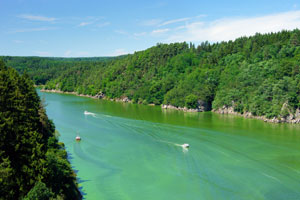
After a monitoring survey in Florida found organisms and microcystins (among other cyanobacterial toxins) in surface water drinking sources, a pilot ecological study was performed using a Geographic Information System (GIS) to evaluate the risk of primary hepatocellular carcinoma (HCC) and proximity to a surface water treatment plant at cancer diagnosis. The study linked all HCC cancers diagnosed in Florida from 1981 to 1998 with environmental databases. A significantly increased risk for HCC with residence within the service area of a surface water treatment plant was found compared to persons living in areas contiguous to the surface water treatment plants.
However, this increased risk was not seen in comparison to persons living in randomly selected ground water treatment service areas or compared to the Florida cumulative incidence rate for the study period, using various comparison and GIS methodologies. Furthermore, these findings must be interpreted in light of significant issues of latency, high population mobility, and the lack of individual exposure information. Nevertheless, the issue of acute and chronic human health effects associated with the consumption of surface waters possibly contaminated by blue green algal toxins merits further investigation.
Primary hepatocellular carcinoma (HCC), a malignant epithelial tumor, is the most prevalent type of liver cancer in the world. It is one of the three leading causes of cancer mortality, accounting for 25 million deaths annually world wide, with a ratio of mortality to incidence of 0.98:1 (London and Pisani). HCC is particularly a problem in the developing countries of the world where 81% of the worlds cases are found ( Parkin and Parkin). For individuals living in developed countries versus developing countries, the age-standardized incidence rates are 7.6/100,000 and 17.9/100,000 for males, and 2.6/100,000 and 6.2/100,000 for females, respectively ( Parkin et al., 1999a). Although, the incidence of HCC is relatively low in the US, it has been increasing (Martin and El). In Florida, since 1981 to 1998, there was a significant increase in the average annual HCC incidence rate ( Shea et al., 2001)). In particular, the average Florida annual HCC incidence rates among male and female hispanics and blacks have been consistently twice the rate of white males and females as standardized rate ratios (SRRs; Shea et al., 2001).
During this time period, the incidence rate in hispanic males (3.29/100,000) approached twice the rate reported in white males (1.82/100,000), while black males (3.86/100,000) had greater than twice the rate of white males; in females, the rates in both hispanic and black females (1.23/100,000 and 1.18/100,000, respectively) were approximately twice those of white females (0.6/100,000). The cyanobacteria or blue green algae are an ancient and ubiquitous family of organisms, many with photosynthetic abilities (Chorus; Carmichael; Falconer and NHMRC). The cyanobacteria frequently are found growing in marine, brackish and fresh waters, including freshwater surface water drinking sources, such as lakes and drinking water reservoirs.
Similar to marine algal blooms, such as red tides, cyanobacteria periodically exhibit significantly increased reproductive rates and total population biomass known as a bloom. The reasons for these cyanobacteria blooms are not completely understood, but most cases are related to the addition of nutrients via runoff ( Philipp; Carmichael and Rapala). Large bloom events are classified as harmful algal blooms if they cause negative environmental impacts such as:
