


- The TRUTH About America's Water
- Water Pollutants that Cause Illness
- Are Minerals in Water Important for Health?
- Top 5 Drinking Water Contaminants
- Do I Need a Whole House Water Filter?

Ultrafiltration – A Membrane Filtration Technology
Ultrafiltration (UF) is a type of membrane filtration in which hydrostatic pressure forces a liquid against a semipermeable membrane. A semipermeable membrane is a thin layer of material capable of separating substances when a driving force is applied across the membrane. Once considered a viable technology only for desalination, membrane processes are increasingly employed to remove bacteria and other microorganisms, particulate material, and natural organic material, which can impart color, tastes, and odors to the water and react with disinfectants to form disinfection byproducts (DBP). As advancements are made in membrane production and module design, capital and operating costs continue to decline.
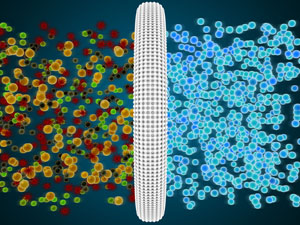
Ultrafiltration uses hollow fibers of membrane material and the feed water flows either inside the shell, or in the lumen of the fibers. Suspended solids and solutes of high molecular weight are retained, while water and low molecular weight solutes pass through the membrane. This separation process is used in industry and research for purifying and concentrating macromolecular (103 - 106 Da) solutions, especially protein solutions. Ultrafiltration is not fundamentally different from reverse osmosis, microfiltration or nanofiltration, except in terms of the size of the molecules it retains. When strategically combined with other purification technologies in a complete water system, UF is ideal for the removal of colloids, proteins, bacteria, pyrogens, proteins, and macromolecules larger than the membrane pore size from water. The primary removal mechanism is size exclusion, though surface chemistry of the particles or the membrane may affect the purification efficiency. UF can be used as pretreatment for reverse osmosis systems or as a final filtration stage for deionized water.
The primary advantages of low-pressure UF membrane processes compared with conventional clarification and disinfection (post chlorination) processes are:
- No need for chemicals (coagulants, flocculates, disinfectants, pH adjustment);
- Size-exclusion filtration as opposed to media depth filtration;
- Good and constant quality of the treated water in terms of particle and microbial removal;
- Process and plant compactness; and
- Simple automation.
