


- The TRUTH About America's Water
- Water Pollutants that Cause Illness
- Are Minerals in Water Important for Health?
- Top 5 Drinking Water Contaminants
- Do I Need a Whole House Water Filter?

Remove Iron and Manganese from Water
Manganese and iron (especially the latter) produce problems to water appliances and increase the hardness of water. Many types of treatment are effective for the removal of iron and manganese from water, but not all methods are equally effective under all conditions.
Generally speaking, there are three basic methods to treat water containing these two contaminants. These are:
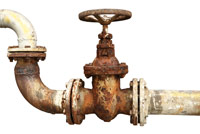
1) Ion exchange water softeners
- (a) Iron filters
- (b) Feed oxidizing agent and filter
- i) Chlorine or
- ii) Potassium permanganate (KmnO4): A dark purple crystalline solid, used as an oxidizing agent in a wide variety of processes. As a solid it is quite stable, and may be kept indefinitely if stored in a closed container in a cool dry area.
- (a) "Pot" feeders>
- (b) Solution feeders
- Oxidation and filtration
- Feed an oxidizing agent plus
3) Sequestration*- use of such materials as polyphosphates**
These methods are appropriate for use in treating waters that have an essentially neutral pH. For where waters are acid, the following is an especially useful technique:
Where waters are acid, the following methods of treatment are recommended: The use of an ion exchange softener is acceptable if the iron content is low and the water is not too acid. Larger amounts of iron and acidity call for the use of a solution feeding device and a filter.
