
Live chat by BoldChat
 

Education page - Side bar menus

Water Quality
  Water and Health   Water Quality   Water Can Heal   Contaminants Facts   Top Water News


Water Pressure Explained

Top 5 Water Contaminants

As we turn on the kitchen faucet or start a bath, how the water is coming out may not be something we think about. (Unless of course is dripping or not coming out at all!) But, water pressure is something that we should all be familiar with.

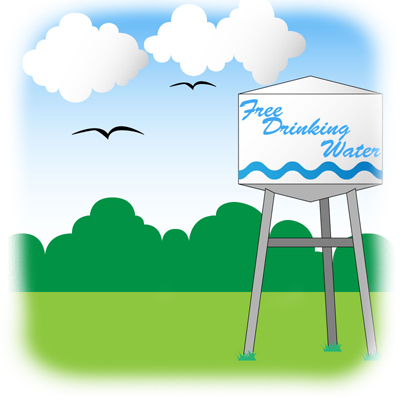
Most households receive water from a municipal water system. In this method, the water is usually extracted from various groundwater sources and then treated to remove impurities. Then, it is then pumped to water towers, and then gravity takes over to provide the pressure that forces the water through pipes, and eventually to our homes. A similar process will take place in closed systems, as well as in lakes and reservoirs.

The pressure of water in each home will vary according to their elevation to the water source, as well as with the system that is delivering the water in. A plumbing company website says, "A cubic foot of water weighs 62.4 lb. and exerts .4333 lbs of pressure per square inch on the bottom of its container at a depth of one foot. Therefore, the discharge pressure of a water storage tower 100 ft. tall will be 43.33 psi. If your house is in a valley 50 ft. below the bottom of the tower, the theoretical water pressure at your house will be approximately 65 psi, reduced by the friction in the pipes."

Water Tower

Typical residential water systems are designed to function under a pressure of 40-70 psi. If the water pressure exceeds 100 psi, a pressure regulator may need to be installed in the line to reduce the pressure to an acceptable range. This protects the equipment in your home from damage caused by excess force exerted by the water. The opposite can occur too; if pressure is below 40 psi, a pressure-booster could be needed to bring it up to acceptable levels. Also, hard water can reduce pressure. It is also important to not that water flow is not the same thing as water pressure. Water flow is the result of your water pressure on the amount of water available for delivery (volume). Low water flow could be a result of an obstruction on the water line, and old pipe with contain mineral build-up or corrosion that reduces the pipe's internal diameter. So, if a water pressure gauge is reading at an acceptable level but the pressure seems off, it may be a flow problem.

If you are unsure of the water pressure at your home, there are a few easy ways to test it. Home Depot carries water pressure gauges and we also carry them here. However, most tanks will already have this feature. Also, a constant pressure valve can easily be installed. This gadget will automatically set flow with the set pressure level for the system. A variable speed pump can also be installed, as well as additional pressure tank capacity-- this will require a professional plumber. Read Next: Water pressure explained II


Divider
 
More Topics on Water Quality & Treatment:

The distance from septic tanks & fieldlines for private wells
Constructed a well-reduce the likelihood of contamination from a septic system
What is the cause of odor that resembles chloroform in my private well?
Should I worry about water pollution from antifreeze leaks onto my driveway?
Water pollution from solvents down the household drain
What can I do to prevent water pollution?
The recommended setback distance for a new private well from an operating or unplugged abandoned well
pH value of water
Swimming/chlorine: protecting your skin and hair

Is it common to find pure water in nature?
Is water pollution & water contamination the same thing?
What do we mean by water quality?
Silica/Silicates concentration in fresh surface/ground water supplies on earth
The recommended setback distance of septic tank systems from well
Radiator coolant water from automobiles that contain ethylene glycol antifreeze may kill animals
Drinking water standards vs. kidney dialysis standards
Popular filtration methods explained
Myth on minerals and water

Contaminants and health effects
Water quality problems and solutions
Sources of our drinking water
Standards for drinking water
How to test your water pressure
How to set up your own well
Self maintain aquatic ecosystem
How tap water is treated and delivered
The bottled water purification process
Alkalinity of water
Filtration OR Purification?

Safe to drink the water from a private well?
How Filters can prolong the life of water pipes
Rainwater...future drinking water?
Drinking water quality and acid rain
Emerging issues of water & infectious diseases
Dirty water or bombs-Iraq
Terrorist attacks on water supplies
Hygiene & your water
Eutrophication in water
Explained Solar Water Disinfection
Hard and soft water
Coliform bacteria affect water quality

We are proud to be the authoritative website for information on water quality solutions, water purification and treatment. We provide heavy duty, professional water filtering products to remove contaminants caused by industrial and agricultural water pollution and contamination to provide safe and pure drinking water. Many of our top quality home reverse osmosis drinking water systems, whole house water filters, salt-free water softeners, and electronic water softeners/conditioners are currently on sale.
  = Products of Superior Performance and Dependability