




Water and Senior Citizens
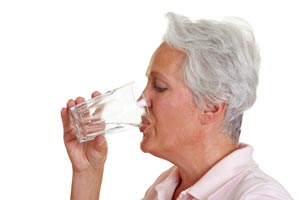
Lack of water is the number one trigger of daytime fatigue. As we age, the balance between our need for water and our thirst for water shifts. In fact, the less water an older person drinks, the less thirsty they become, leaving them open to the risk of serious dehydration and other complications.
Further, confusion over the difference between hunger and thirst intensifies over the years, making it all the more important to conscientiously drink adequate amounts of water throughout the day. One should consume at least one cup of water for every 20 pounds of body weight daily, that's around 6-8 glasses for the average person.
Exercise and warm weather both call for additional water intake to replace fluids lost through excessive perspiration. So, all those senior citizens who head south for retirement will need to increase water intake! Increased fiber intake among seniors, which is usually recommended for older people to aid with constipation and other health concerns, also increases the need for water. It is always important to be educated about the medications your loved ones are taking. Many medications that are diuretics will need more fluids to be consumed daily to avoid dehydration.
The human body is at least 50% water, of which 2-3 quarts are lost on a daily basis. Even bones are over 20% water! Even a 2% drop in body water can trigger fuzzy short-term memory, trouble with basic math and reading, and difficulty staying focused. Aside from replenishing what is lost in order to hydrate the blood and tissues, water also lubricates joints, regulates temperature, and moistens the lungs to allow for breathing. Inadequate water intake over time prevents these processes from occurring, leading to arthritis, sore muscles, heavy breathing, and a higher body temperature. This means that not drinking enough water over time can result in more severe effects at an older age, which means preventable problems during what should be the golden years. In the body, water acts as a solvent, coolant, lubricant, and transport agent. Virtually nothing takes place in the body without water playing a vital role. It is needed to regulate body temperature, carry nutrients, remove toxins and waste materials, and provide the medium in which all cellular chemical reactions take place.
