



Sources of Water: Where Does Your Water Come From?
Water is a vital element in each of our lives. Not only is it essential to our health, but also we use it for numerous daily household tasks. Every day we use water for cooking, bathing, cleaning, and drinking; but have you ever asked yourself “where does our drinking water come from?
Knowing where your water comes from is important for several reasons, including ensuring its safety, understanding its quality and characteristics, and protecting the environment.
Some important things to know about the sources of water you use:
Water source: The source of your water can come from various places, such as groundwater, surface water, or a combination of both.
- Surface Water is found in lakes, rivers, and reservoirs.
- Groundwater lies under the surface of the land, where it travels through and fills openings in the rocks. The rocks that store and transmit groundwater are called aquifers. Groundwater must be pumped from an aquifer or well to the earth's surface for use.
Treatment: Depending on the sources of water, your water may undergo treatment before it reaches your tap. Treatment can include disinfection to kill harmful bacteria, filtration to remove impurities, and chemical treatments to adjust the pH or remove contaminants.
Contaminants: Depending on the source and treatment, your water may contain various contaminants, such as bacteria, viruses, minerals, chemicals, or pollutants. Some of these contaminants can be harmful to your health, so it's important to know what they are and how to reduce your exposure to them.
Water Quality: The quality of your water can affect its taste, odor, and appearance, as well as its suitability for various uses, such as drinking, cooking, bathing, or irrigation. Factors that can affect water quality include temperature, pH, hardness, alkalinity, and dissolved solids.
Conservation: Knowing where your water comes from can also help you understand the importance of conserving water and protecting the environment. By reducing your water usage and preventing pollution, you can help ensure a sustainable water supply for future generations.
Where does my water come from?
The water you use most likely reaches you through one of two methods: A private well or a city water system. Private wells pump ground water for private household use, while city water systems may provide water from either ground or surface sources of water, sometimes even both. Let’s explore how private wells and city water systems are treated.
Private Household Wells
Where does well water come from? Approximately 14 percent of the U.S. population relies on individually owned and operated sources of drinking water, such as wells, cisterns, and springs. The majority of household wells are found in rural areas.
Those who receive their water from a private well are solely responsible for the safety of the water. Private wells are not subject to federal regulations and are generally regulated on a very limited basis by states. Local health departments may assist well owners with periodic testing for bacteria or nitrates, but the bulk of the responsibility for caring for the well falls on the owner.
What Contaminants Are In The Well Water?
Since the well owner is primarily responsible for the water, it is important to know what poses a threat to the well and the groundwater from which it is sourced. Well, water can become contaminated through a variety of methods.
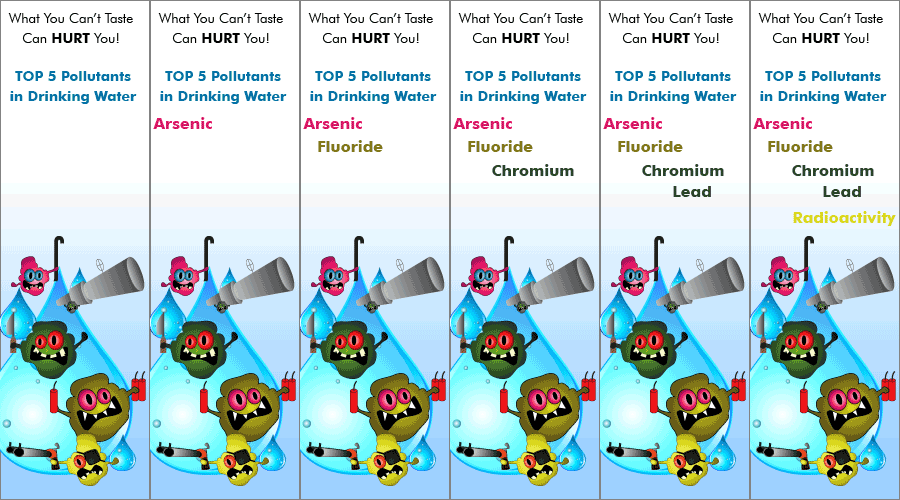
Some contaminants occur in nature that may present a health risk if they are found in drinking water. These contaminants include bacteria, viruses, uranium, radium, nitrate, arsenic, chromium, and fluoride. Many of these contaminants are naturally present in rock formations, and consequently, end up in the water supply.
Other sources of contamination are a result of human activities such as manufacturing, agriculture, or individual misuse. The following activities may cause harmful chemicals to enter the well water owner's water supply.
- Leakage from waste disposal, treatment, or storage sites.
- Discharges from factories, industrial sites, or sewage treatment facilities.
- Leaching from aerial or land application of pesticides and fertilizers on yards or fields.
- Accidental chemical spills.
- Leakage from underground storage tanks.
- Improper disposal of household wastes such as cleaning fluids, paint, and motor oil.
How To Treat Well Water
Using private wells as sources of drinking water is a serious responsibility. As a private well owner, it is best to make sure the water you consume is safe from harmful contaminants. Even though one might not be able to taste the difference filtered water, the difference in health would be revealed over time and is non-reversible.
The specific treatment methods will depend on the quality of the well water and the contaminants present. Here are some common treatment options for private well owners:
Testing: The first step in treating well water is to get it tested for common contaminants, such as bacteria, nitrates, and metals. Testing should be done at least once a year and more frequently if there are changes in the water quality or if there are concerns about contamination.
Disinfection: If the well water is contaminated with bacteria, viruses, or other microorganisms, disinfection may be necessary. Chlorination or ultraviolet (UV) radiation are effective disinfection methods that can kill most microorganisms.
Filtration: Filtration can remove sediment, sand, and other particles from the well water. There are various types of filtration systems, such as sediment filters, activated carbon filters, and reverse osmosis filters.
Water Softening: If the well water is hard (i.e., high in minerals such as calcium and magnesium), a water softener can be used to remove the minerals and improve the water quality.
Iron and manganese removal: If the well water has high levels of iron or manganese, specialized filters can be used to remove these minerals.
Nitrate removal: If the well water has high levels of nitrate, which can be harmful to infants and pregnant women, a nitrate-specific filter can be installed.
It's important to note that treatment methods will vary depending on the specific contaminants present in the well water, and treatment systems must be properly maintained to ensure their effectiveness. It's recommended to consult with a professional water treatment company or a local health department to determine the best treatment options for your well water.
City Water Systems
Approximately 86 percent of the U.S. population receives its water from city water systems. City water systems are required to meet the standards set by the U.S. Environmental Protection Agency (EPA) under the authority of the Safe Drinking Water Act (SDWA).
The SDWA was passed by Congress in 1974 to establish nationally consistent drinking water standards. A standard is the maximum level of a substance that the EPA has deemed acceptable in drinking water. In 1986 the SDWA was amended to require the EPA to publish standards for 83 specific contaminants and additional standards thereafter. To date, the EPA has issued or proposed limits for 87 substances. City water systems are currently revising their drinking water programs to meet the more stringent requirements of the amendments.
City water systems must ensure that the drinking water they supply does not have contaminant levels higher than the standards of the SDWA, the SDWA amendments, or state regulations.
How are Appropriate Contaminant Levels Decided?
In order to set a standard for a drinking water contaminant, the EPA first reviews the data concerning the health effects the substance may cause. The EPA then proposes nonmandatory Maximum Contaminant Level Goals (MCLGs). MCLGs are set at zero for contaminants that are known or probable human carcinogens. For noncarcinogens, MCLGs are set at a level where no adverse health effects would occur with a margin of safety.
At the same time, the EPA also proposes a Maximum Contaminant Level (MCL), the enforceable drinking water standard, which is set as close to the MCLG as possible, taking into account technological and economic considerations.
After a time for public comment and review of the MCL and MCLG, the EPA enacts a final regulation. States are expected to adopt the standard within 18 months of enactment.
How Is City Water Contamination Monitored?
The SDWA requires utilities to conduct routine monitoring and testing of public water supplies. Two types of sampling are required. Routine Sampling takes place on a regular basis and ensures that a treatment plant is running properly for delivering a consistent quality of drinking water. It also determines whether water quality meets the MCLs.
When a routine sample analysis indicates elevated levels of a particular contaminant that may exceed EPA or state standards, states may require systems to take a check sample. Check samples are used to confirm the results of a problem discovered during routine sampling.
In summary, the EPA generally delegates to the states the authority to enforce all federal drinking water standards. However; how well they are enforced varies. It’s worth noting that the national standards for contaminants were developed by the EPA more than 15 years ago, meaning the standards may lack insights from more recent contamination findings and health considerations.
Point of Use Water Filter Solutions
Whether consumers receive their water from a private well or a city water system, they may wish to treat it at its point-of-use (POU). Consumers do have the option to choose the higher quality of water that POU technologies can provide.
POU technologies treat water at single or multiple taps or for the whole house, and improve water quality in a variety of ways. Unusual taste, color, and odor or water may be corrected by POU technologies, and some POU devices also reduce harmful contaminants.
A variety of POU equipment is available for improving drinking water and other special purposes. Each technology is designed to solve one or several different water quality problems. In order to choose the right equipment, it is important to define the nature and extent of their water quality problems.
Water Conservation
A significant benefit of using APEC water systems is the use of smart technology that consistently measures and adjusts important factors to minimize water and energy waste. Not only is this beneficial for the environment, but it also saves you money on water bills in the long run.
There are several simple behaviors that can help you and your household reduce water waste. These include:
- Upgrade to water-efficient appliances, such as dishwashers and washing machines, which can use up to 50 percent less water than older models.
- Wait to water outdoor plants and lawns until it gets cooler to reduce evaporation
- Use a drip system in specific areas that need water avoid overwatering
- Reuse water when possible, such as collecting rainwater for outdoor watering, using leftover pasta water for cooking, or using bathwater for flushing toilets.
- Turn off the tap while brushing your teeth, shaving, or washing dishes, and use a basin or bucket to catch excess water for other uses, such as watering plants or cleaning.
- Check for leaks in faucets, toilets, and pipes and repair them promptly. Even small leaks can waste a significant amount of water over time.
What To Do Next
The first step in correcting a water quality problem is often to have the water tested. When the safety of the water is in question, it should always be tested by a state-certified or other reputable laboratory. Testing for aesthetic concerns such as taste, odor, color, and hardness may be performed in the home by a professional water treatment dealer.
Testing the water will help determine the proper treatment necessary. We suggest you before purchasing a product, first become an educated consumer.
Depending on the level of contamination, you may very well be in need of an expert water treatment system. APEC offers a variety of water systems to meet your needs.
View Products
