



One Third of Bottled Water Contain Contaminants
Sacramento - Saying consumers should know what they're drinking, environmentalists and the East Bay Municipal Utility District want bottled water to follow the same disclosure rules as tap water.
Makers of bottled water, which include Pepsi and Coca-Cola, say there is already plenty of disclosure about their water's contents.
Advocates of two bills introduced in the Legislature say there isn't nearly enough.
Sacramento - Saying
"People tout bottled water as this pure substance that's trickling from clear mountain springs when, in fact, that may not be the case," said Assemblywoman Ellen Corbett, D-San Leandro, author of one of the bills.
"When I pick up bottled water, I want to know it truly is something that's good for me and better for me than drinking something else," Corbett said.
Water Bottle Contaminants
Nearly 70 percent of Californians drink bottled water, which nationwide is a $6 billion industry. And by the end of this year, bottled water will have moved past milk, coffee and beer to become the second most popular beverage behind soft drinks, according to the Beverage Marketing Corp.
Bottled water's popularity is fuelled in part by suspicions over the quality of tap water.
But Corbett and the backers of her bill say drink no way of knowing whether bottled water is better or worse.
Unlike tap water, bottled water is considered a food product and is subject to the same sanitation and preparation requirements as other food stuffs.
Although often advertising themselves as superior to tap water, bottlers are required in most cases only to meet the same quality standards as tap water.
Of the hundreds of contaminants state and federal regulators measure, bottled water is subject to a higher standard for only two, according to Randy Kanouse, EBMUD's Sacramento lobbyist.
Bottlers don't have to create a "consumer confidence" report each year like water agencies do. The reports tell customers what's in their water. It details levels of contaminants, if any, like lead, aluminium, arsenic and salt.
Corbett's bill, AB83, and a companion bill, SB50, by Sen. Byron Sher, D- Palo Alto, would impose the same reporting requirement on bottlers.
Bottling plants and water vending machines would be subject to annual inspections. Bottlers, vending machine owners and water haulers would pay an $86 fee to cover the costs of the inspections.
Bottlers say the bills aren't needed.
"There are already comprehensive, stringent regulations in place at the federal level for quality labeling," said Stephen Kay, a spokesman for the International Bottled Water Association. "These two proposed bills are proscriptive and redundant."
Kay also cited a bill signed last year that requires bottlers to include an 800 number, Web site or address on their labels so consumers can get more information.
But Adrianna Quintero, a lobbyist for the Natural Resources Defence Council,
says knowing the nutritional facts about water is not enough.
"It's pointless to tell me water has zero calories and zero carbohydrates," Quintero said. "Is there arsenic, nitrates, microbiologic contaminants, perchlorate? If these bottlers are doing the right thing, they shouldn't have a problem telling me about it."
The Food and Drug Administration needs to tightened its regulations on bottled water after a four-year study by the NRDC found that of 103 brands surveyed, one- third contained levels of contamination.
The NRDC found the contents of one bottle, labeled "Spring Water," actually came from an industrial parking lot next to a hazardous waste site.
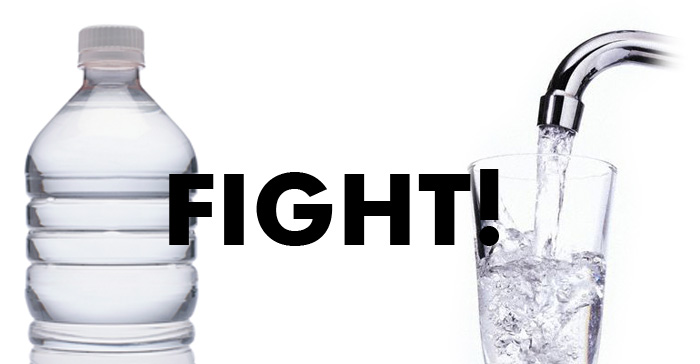 The FDA now insists that bottled water actually come from a spring if the bottler claims it does.
Bottled water sales have been growing at roughly 10 percent each year through the 1990s.
California is by far the biggest guzzler of bottled water, representing about 24 percent of the national market -- twice the consumption level of any other state.
It's attracted the interest of some of the country's biggest beverage sellers like Pepsi, which created Aquafina bottled water. Coca-Cola created Dasani.
Nestle Waters of North America owns Arrowhead, Calistoga, Poland Spring, Perrier, S. Pellegrino and Vittel.
But water districts like EBMUD aren't worried.
"Bottled water doesn't cut into our market share," said Kanouse. "It's kind of like conservation -- it relieves a small amount of the demand we have."
Written by Greg Lucas, Sacramento Bureau Chief
Read Next: Drugs Found in Tap Water is a Costly Problem
