


- The TRUTH About America's Water
- Water Pollutants that Cause Illness
- Are Minerals in Water Important for Health?
- Top 5 Drinking Water Contaminants
- Do I Need a Whole House Water Filter?

The Cause of a Private Well Resembling Chloroform
It is always a wise decision to be vigilant concerning the odor and taste of your drinking water, whether from surface or groundwater. Should your well water ever have an odor or taste problem, it should come as no shock given the volume of possible causes of it. There are at least 700 pollutants found in the drinking water, but the EPA is required to set standards for only about sixty of them, and these standards are routinely violated without consequence. Out of the 250,000 violations, the states took just over 2,600 enforcement actions, while the EPA took about 600. Municipalities struggle with outdated technology. Over 70,000 different chemical compounds are now in use by industry, agriculture, and private citizens, with 5,000 new and unproven chemical compounds being added into the environment each year. That amounts to 18 billion pounds of new pollutants every year.
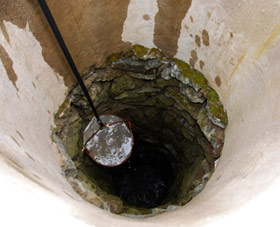
So what is chloroform? Chloroform is also known as trichloromethane, methane chloride, or methyl trichloride. It is a colorless liquid with a pleasant, non-irritating odor and slightly sweet taste. Most of the chloroform found in the environment comes from the industry. It will only burn when it reaches very high temperatures. Chloroform was one of the first inhaled anesthetics to be used during surgery, but it is not used for anesthesia today. Nearly all the chloroform made in the United States today is used to make other chemicals, but some is sold or traded to other countries. We also import chloroform. Chloroform enters the environment from chemical companies, paper mills, wastewater from sewage treatment plants, and drinking water that contains chlorine. Chloroform can enter the air directly from factories that make or use it, and by evaporating from water and soil that contain it. It can enter water and soil when wastewater that contains chlorine is released into water or soil. It may enter water and soil from spills and by leaks from storage and waste sites. In addition to its industrial production and use, small amounts of chloroform are formed as an unwanted product during the process of adding chlorine to the water. Chlorine is added to most drinking water and many wastewaters to destroy bacteria. There are many ways for chloroform to enter the environment, so small amounts of it are likely to be found almost everywhere.
Chloroform evaporates very quickly when exposed to air. Chloroform also dissolves easily in water, but does not stick to the soil very well. This means that it can travel down through the soil to groundwater where it can enter a water supply. Chloroform lasts for a long time in both the air and in the groundwater. Most chloroform in the air eventually breaks down, but this process is slow. The breakdown products in air include phosgene, which is more toxic than chloroform, and hydrogen chloride, which is also toxic. Some chloroform may break down in the soil. Chloroform does not appear to build up in great amounts in plants and animals, but we find some small amounts of chloroform in foods. Exposure Pathways You are probably exposed to small amounts of chloroform by drinking water and beverages (such as soft drinks) made using water that contains it.
You can also get chloroform in your body by eating food, by breathing air, and by skin contact with water that contains it. You are most likely to be exposed to chloroform by drinking water and breathing indoor or outdoor air containing it. The amount of chloroform normally expected to be present in air ranges from 0.02 to 0.05 parts of chloroform per billion parts of air (ppb) and from 2 to 44 ppb in treated drinking water. However, in some places, chloroform concentrations may be higher than 44 ppb.
