
top 5 Water Contaminants
Yes,
it is possible. Research confirms that GAC filter systems can take up
and hold (adsorb) nitrate during treatment processes to remove certain
organic chemicals. Then at some unknown frequency, the carbon releases
the nitrate into the treated water. This has proved to be a problem with
some California water systems using GAC filtration to remove dibromochloropropane
(DBCP) from ground water supplies. Modification to the GAC systems may
be necessary to prevent this storage and release of nitrate.
Granular
activated carbon (GAC) filtration is effective in removing organic contaminants
from water. Since, organic chemicals are implicated in producing taste,
odor and color problems, GAC filtration is used to improve water aesthetically.
When water is passed through a GAC filter, the carbon particles attract
and remove contaminants, like hydrogen sulphide, heavy metals (lead, mercury
and copper), chlorine and organic compounds. GAC filters use a cartridge
packed with granules of activated carbon. While some filters contain bacteriostatic
materials (which prevent the growth of bacteria), these filters can still
eventually start trapping bacteria, allowing it to grow on the filter.
For this reason, it is essential to flush the filter daily with cold,
treated, potable water to remove any bacterial residue. Activated carbon
is expensive.
A
disadvantage with activated carbon is the high emissions of sulphur dioxide
generated from the heating process in manufacturing carbon from coal.
The media can become a breeding ground for micro organisms. One of the
drawbacks of a GAC filter is its tendency to “channel,” where water creates
distinct paths through the media. This greatly reduces the available contact
area, which shortens the effective life of the filter. It also means that
additional pre-filtering becomes necessary because the carbon is not at
a uniform pore size for this purpose.
Several
years ago, this laboratory reported (Water Engineering & Management, March
1994) that nitrification in the piping from basins to laboratory taps
was responsible for changing the quality of basin water. This suggested
that the laboratory tap water was not appropriate for checking certain
parameters of basin waters. Nitrification in our plant occurred frequently
with ammoniated waters in the piping from the primary basins having low
levels of monochloramine (1.0p;1.5 mg/L), but was rarely detected in
the sand filters or in the piping from the secondary basins where ammoniated
waters flow with high chloramines levels (3.5p;4.5 mg/L). It is possible
that nitrification or some other bacterial metabolic activities were occurring
in the GAC filters. This conclusion was based on the following facts:
complete absence of disinfectant, constant presence of heterotrophic bacteria
(104p;105 cells/ml) in the filter effluent, and presence of the free
and combined ammonia in the filter influent. Nitrification in the GAC
filters was detected within two months of installation. This was shown
by an increase in nitrate and nitrite levels, and a simultaneous reduction
of total ammonia in the filter effluent. The presence of these anions
results not only in the reduction of chloramines in the distribution system,
but it also has the potential to lead to adverse health effects such as
methemoglobinemia.
Therefore,
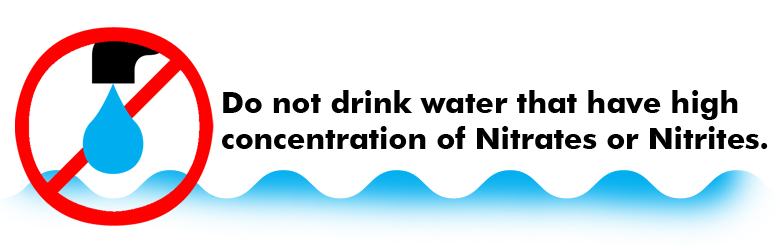
strict monitoring for these anions or controlling their formation is necessary
whenever nitrification is suspected in GAC filters. Nitrite and nitrate
are both regulated by primary maximum contaminant levels of 1 and 10 mg/L
as N respectively, sampled at the source or entry to the distribution
system. During monitoring of the catalytic activity of GAC, it was found
that ammonia determination plays an important role in understanding the
nitrification process in the GAC filters.
Reverse Osmosis Water
Thus,
studies with ammonia specification (free, combined, and total ammonia)
before and after filtration made it possible to investigate relationships
between GAC aging (acclimatization), ammonia removal, and nitrite formation.
The filter influent carries ammoniated water, both free and combined ammonia
(monochloramine), that are potential substrates for nitrifying bacteria.
This is true unless the concentration is very low. The raw water contains
ammonia at a level that is less than 0.1 mg/L as an NH3-N.
Occurrences
of nitrification in GAC filters are mostly associated with high concentrations
of the total ammonia in the filter influent (>1.5 mg/L). In some cases
of feeding ammonia, free and combined forms dissipate and cannot be traced
to either nitrate/nitrite or free ammonia after filtration. It would be
interesting to pursue the fate of the lost ammonia in GAC filters. It
may follow that at the inductive period, some activated carbon is converted
to activated carbon oxides changing monochloramine to nitrogen gas. (This
information was provided by a GAC supplier.) It is also well known that
when nitrifying bacteria, ammonia is converted into N2O under low dissolved
oxygen. This type of metabolic pathway shift could be occurring in the
GAC media. Therefore, ammonia dissipation could be continuing in effluent
water without a nitrate and nitrite release. |