Home of APEC Ultra Reverse Osmosis Water Filter Systems
View your basket contentsCheckout from the store
 

Water Education  

Learning Center Categories:

Water And Health

Learn About Water Quality

Water Can Heal!

Contaminants Fact Sheets

Top Water News


Did you know?
Reverse osmosis is the finest water filtration method known. This process will allow the removal of particles as small as ions from a solution. It is used to purify water and remove salts and other impurities in order to improve the color, taste or properties of the fluid. R.O. uses a membrane that is semi-permeable, allowing the fluid that is being purified to pass through it, while rejecting other ions and contaminants from passing
. This technology uses a process known as crossflow to allow the r.o. membrane to continually clean itself. This is the reason of why an r.o. element can last many years before clogging or need replacement. This water purification process requires a driving force to push the fluid through the membrane, and the most common force is household water pressure or pressure from a booster pump. The higher the pressure, the larger the driving force and efficiency.


The "Truth" on our water
Contaminants and health effects
Water quality problems and solutions
Sources of our drinking water
Standards for drinking water
Hard and soft water
pH value of water

Filtration OR Purification?
Myth on minerals and water
Popular filtration methods explained
How to test your water pressure
How to set up your own well
Swimming/chlorine: protecting your skin and hair
How tap water is treated and delivered

The bottled water purification process
Safe to drink the water from a private well?
How Filters can prolong the life of water pipes
Drinking water quality and acid rain
More Topics...

Which U.S. Cities have 'Risk' or Potentially Unsafe Water?

We often take the purity of our tap water for granted -- and we shouldn't. A recent study (NRDC's What's on Tap?) a carefully researched, documented and peer-reviewed study of the drinking water systems of 19 U.S. cities, found that pollution and deteriorating, out-of-date plumbing are sometimes delivering drinking water that might pose health risks to some residents. Many cities around the country rely on pre-World War I-era water delivery systems and treatment technology. Aging pipes can break, leach contaminants into the water they carry and breed bacteria -- all potential prescriptions for illness. And old-fashioned water treatment -- built to filter out particles in the water and kill some parasites and bacteria -- generally fails to remove 21st-century contaminants like pesticides, industrial chemicals and arsenic. The research also found one overarching truth: If steps are not taken now, our drinking water will get worse.

The U.S. government is making the problem worse instead of better. Seemingly more concerned about protecting corporate polluters than protecting public health, the administration is campaigning to hobble existing laws, thwart efforts to strengthen current pollution standards and cut funds for programs that protect tap water. Government -- whether city, state or federal -- should be doing all it can to ensure that citizens get clean, safe drinking water every time they turn on a faucet or stop at a public water fountain. And an informed, involved citizenry is the key to the process; it's through analyzing the report data that all Americans get the opportunity to look into the quality of their city's water supply, and to demand that our elected officials do what's necessary to provide safe tap water.

The recent report issues grades for each studied city in three areas: water quality, right-to-know reports, and source water protection. Good drinking water depends on cities getting three things right:

  • Lakes, streams, reservoirs and wells must be protected from pollution
  • Pipes must be sound and well-maintained
  • Modern treatment facilities are a must.
  • If just one of those three factors goes away, water quality will suffer. For example, these four cities have fair-to-substandard drinking water:
  • Atlanta, which maintains its distribution system poorly
  • Albuquerque and San Francisco, which have poor treatment systems
  • Fresno, which has no real source water protection.

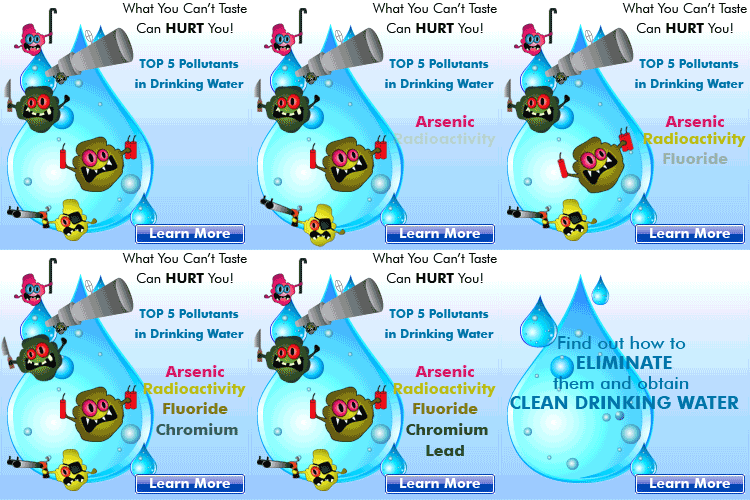
So what does all this mean in terms of what's actually in your water glass? If your city has a water quality problem, your tap water may at times carry a worrisome collection of contaminants. Tap water can contain a vast array of contaminants, but a handful showed up repeatedly in the water of these cities: Lead, which enters drinking water supplies from the corrosion of pipes and plumbing fixtures and can cause brain damage in infants and children; Pathogens (germs) that can make people sick, especially those with weakened immune systems, the frail elderly and the very young ; By-products of chlorine treatment such as trihalomethanes and haloacetic acids, which may cause cancer and reproductive problems; Arsenic, radon, the rocket fuel perchlorate and other carcinogens or otherwise toxic chemicals contaminants like these get into our water from many different sources.

A few examples: runoff from sewage systems that overflow after a heavy storm; runoff from contaminant-laden sites like roads, pesticide and fertilizer-rich farms and lawns, and mining sites; wastes from huge animal feedlots; and industrial pollution that leaches into groundwater or is released into surface water. A high level of any of these contaminants in your water represents a failure of your city's "water treatment train" -- a series of steps your water is put through to filter and disinfect it before it is delivered to your tap. By extension, it also represents a failure by your government -- local, state and federal -- to protect your water supply and ensure that pure, safe and good-tasting water is supplied to your home. NRDC's study found that relatively few cities are in outright violation of national standards for contamination of drinking water, but this is more a result of weak standards than it is of low contaminant levels.

For example, cancer-causing arsenic is currently present in the drinking water of 22 million Americans at average levels of 5 ppb, well below a new EPA standard for arsenic of 10 ppb that will go into effect in 2006. Yet scientists now know that there is no safe level of arsenic in drinking water. (The EPA found that a standard of 3 ppb would have been feasible, but industry lobbying and concerns over treatment costs prevailed over public safety.) Many cities failed to meet the EPA's "level of concern" for various contaminants that are not yet regulated. Studies also yield another broad truth about the nation's drinking water "treatment trains": many cities show an increase in the frequency of periodic spikes in contaminant levels, indicating that the World War I-era plumbing and water treatment facilities still widely employed may be inadequate to handle contaminant spills or even the basic daily contaminant loads produced by our heavily industrialized, densely populated cities. And spikes above the EPA's standards generally don't trigger a violation; usually only an average level over the standard is considered a violation.
The bottom line is this: the tap water in some cities might pose health risks to vulnerable consumers -- people who have serious immune system problems, pregnant women, parents of infants, those with chronic illnesses and the elderly should consult with their health care providers about the safety of tap water. Your Right to Know What's in Your Tap Water. The first question that one would logically ask on reading the above is, "How do I find out what's in my water glass?" And according to U.S. law, every citizen is entitled to a straight answer. Every city is required to publish reports about the safety and quality of its drinking water system. The problem the study found, is that while some cities do a good job with their right-to-know reports, others publish information that is incomplete or misleading: Reports from Atlanta, Boston, Fresno, Houston, Newark, Phoenix, Seattle and Washington, D.C. included false, unqualified or misleading claims, or buried crucial information about problems deep in their reports; Reports from Newark, New Orleans and Phoenix included incorrect or misleading data -- or omitted it entirely; Nearly all cities in the study failed to report on health effects of most contaminants found in their water; Most of the cities studied failed to translate the reports into languages spoken by a large minority in their community.These right-to-know reports hold enormous promise. In addition to informing citizens about the state of their city's water system, they can also build support for investment and encourage citizens to participate in fixing local problems.

Protecting the Source.

The first line of defense in ensuring the safety and quality of drinking water is to ensure that water sources -- lakes, rivers, streams and aquifers (porous underground formations that hold water) -- are protected from pollution. And as indicated above, there are many ways that contaminants get into source water, among them:

  • Municipal sewage
  • Polluted runoff from stormwater or snowmelt in urban and suburban areas
  • Pesticides and fertilizers from agricultural fields
  • Animal waste from feedlots and farms
  • Industrial pollution from factories
  • Mining waste
  • Hazardous waste sites
  • Spills and leaks of petroleum products and industrial chemicals "Natural" contamination such as arsenic or radon that occurs in water as a result of leaching or release of the contaminant from rock.

To keep such contaminants out of tap water, a city's first step is identifying where pollution is coming from. Once these sources are known, the water utility, city planners and citizens of a municipality must work together to figure out how to reduce the threat of contamination. Land purchases often prove useful, allowing the water utility to establish a pollution-free zone around source waters. Utilities may also ban boating and other recreational activities on these waters, push for improved pollution controls, or protect wetlands (which replenish and purify source waters). Some cities are doing a fine job of protecting their drinking water supply. Seattle is doing an excellent job of protecting source water; Boston, San Francisco and Denver also get high marks.

But many other cities have a long way to go: Albuquerque's groundwater is becoming seriously depleted; Fresno's groundwater is highly susceptible to contamination; In Atlanta, Chicago, Detroit, Houston, Los Angeles, New Orleans, Newark, Philadelphia, Phoenix, San Diego and Washington, D.C., source water is threatened by runoff and industrial or sewage contamination; Water supplies in Baltimore, Fresno, Los Angeles, New Orleans, San Diego and several other cities are vulnerable to agricultural pollution containing nitrogen, pesticides or sediment; Denver's source water faces an additional challenge from debris from wildfires and sediments from floods; Manchester's problems apparently come from recreational boating activity in its reservoir.

An informed, involved public is a water utility's strongest ally in an effort to better protect its water supply. The report recommends that citizens urge legislators not to pull the plug on safe water supplies - to stop broad assault on Clean Water Act protections and inform Congress to act to strengthen the laws and contaminant standards we have in place to protect the purity and safety of our drinking water.


Click to see details of Ultra Reverse Osmosis Water Filter System !
Healthy and Convenient! Our Featured Reverse Osmosis Drinking Water System

More Topics on Water Quality & Treatment:

General water treatment
Water quality defined
Hydrologic cycle of water
Meteoric water and cycle
Environmental factors of water
Age of ground water
Temperature of ground water
Water quality of surface water
Cistern water quality
Summary of water quality and the environment

Hard water explained
Hard water problems
Softened water energy savings
Hard water analysis
Hard water and soap curd
Ion exchange principles
More on water softening
Home water softener basics
Water deionization
Lime soda ash water treatment
Water softener alternatives
3 Types of basic water
TDS-Total dissolved solids
Reverse osmosis treatment
Alkalinity of water
Reverse osmosis and pH
Carbon dioxide in water
Chloride and sulfate
Fluoride in drinking water
Hydrogen sulfide in water
Nitrate/ nitrogen in water
Oxygen in drinking water
Silica in drinking water
Sodium/methane/ phenol
Disease-causing organisms
Micro-organism in water1
Micro-organism in water2
Viruses in drinking water
Bacteria in drinking water
Water disinfect methods1
Water disinfect methods2
Water disinfect-chlorine
Dechlorinating filters Q&A
Palatability of water
Turbidity of drinking water
Mechanical filtration
Multi-media (depth filters)
Color of drinking water

Self maintenance guideline for private well owners
Water pressure matters
Common water usage of a household
Public water systems users
The guardian-Safe Drinking Water Act
The correct disinfection practice
Facts on home water treatment

Experiment1-water cycle purify our drinking water
Experiment2-pollution
Experiment3-waster filtration
Experiment4-build an aquifer
Experiment5-pollution control by using carbon
Experiment6-chlorination for disinfection
Experiment7-organisms in source water

Lead in your drinking water?
Arsenic in your drinking water
Read the bottled water label
Common bottled water treatment II
State certified lab for water testing
Earth water distribution
A natural setting for fish
Toxic algae treatment

Backcountry water drinking
Cl2 resistant pathogens
Common contaminants in the water system
Microbes & water quality
The origination of modern water filtration
Define Spring water & the safety
Water quality issues in Europe
Seawater drinkable?


How do water treatment plants work
How does Hydrology affect water
Barriers to quality water source management
Enough water for the future?
Water & agriculture..big connection
Climate change & the water
Negotiation of Water Rights
How pollution affect water?
How water prices were set?
How does Bay-scaping affect water
Nutrient management laws for water
Source Water Assessment Program
Water treatment techniques in the 1960's
Water treatment techniques in the 70's & 80's

How & Why Hazardous Events are monitored
America's ten most polluted rivers
Global Warming affects river & lakes
Define "Safe Water"
Potentially unsafe water in U.S. cities
Drink well water? Watershed management
Common microbes & the problems
To filter or purify water
The physical parameters of good water quality
The chemical parameters of good water quality
How does dissolved oxygen affect water quality
Micro me ida filtration: An alternative to membrane filtration
The "hidden" dangers of water

Biological oxygen demand affect water quality
Coliform bacteria affect water quality
What do Nitrate & Phosphate do?
Nitrogen level affects a long way
Stone Fly & May Flies show the water quality
Good water quality need adequate phosphorous level
What is a healthy watershed
The role of biological in watershed
Rainwater...future drinking water?
Eco-technology..the future of water treatment
Emerging issues of water & infectious diseases

Dirty water or bombs-Iraq
Terrorist attacks on water supplies
Hygiene & your water
Eutrophication in water
Explained Solar Water Disinfection
Perchlorate removal
The methods of selecting the best home water treatment
The health effects from Pesticides
How is water filtered in natural
Pharmaceuticals & Hormones in the water
Disease resistant DNA in the water
Anti-microbials & the danger to your water
The truth:How safe is American water


Introduction to water chemistry
Water chemistry-Atom & Molecules
Nuclear atom-Protons, Neutrons, & Electrons
Basic atom in Flourine, Magnesium, & Chlorine
The Isotopes of Hydrogen
Electrons in chemical interaction
Ionic reaction in natural
Remove Ionic impurities from water
Chemical term explained-Valence

Water problems- Iron
Introduce the state of Iron
Water problems- Manganese
Removal of Iron & Manganese from water
Ion exchange explained
An effective treatment for medium concentrations of Iron
Sequestration-Polyphosphate treatment explained
Chemical solution feeders explained
Water problems-Corrosion

Causes of corrosion
Corrosion on the common household used metals
Causes of corrosion explained II
The methods for controlling corrosion problem
Soft water to softened water
The needs for water testing
Correctly prepare water sample for testing
How to interpret water analysis I
How to interpret water analysis II
How to interpret water analysis III
How to interpret water analysis IV

How to choose the right plumber to install water softener
Recommended installation procedures-water softener
Installation equipments for the traditional water softener
Water softener installed in rural areas
Water softener installation-solution for pressure drop
Solution for pressure drop II- water softener


The five most common contamination sources for local drinking water
Monitoring finished water for good water quality
Water treatment -Magnesium deficiency
Arsenic exceed the drinking water standard
More regulations & research on drinking water
Explain Alkalinity
Impact on ground water quality
Potential drinking water source-Wastewater
Concern about GAC filtration systems that trap nitrate

Legality for a salt-based water softener
Methods of regenerate manganese greensand filter media

From chlorine to chlormaines
Humidifers operate better using filtered & purified water

Consumer confidence report to the public
Water contaminants -Cyanobacteria
Reverse osmosis can filter out Cryptosporidiosis microbes
Taste of water - TDS level
Private well water supplies - risk for Radon
Source for drinking water - Icebergs
Biofouling in a water pump/filter/plumbing system

Reasons for testing total coliforms & fecal coliforms
Drinking water reservoirs-manganese problems due to temperature stratification
Ozone treatment remove iron or manganese from water
Bacterial colonies-Biofilms

Public water treatment cost-Petroleum

Chloramines disinfection - Nitrite problem
Bottled water regulation - Mercury
The strangest compound known to man
The new detection of low levels of enteric viruses
The use of bio-sensors to detect Crypotosporidium-parvum bacteria
Produce higher quality well-water
Controlling taste & odor - Arizona
Methylmercury is a concern in aquatic environments

Time to backwash your acid neutralizing filter
Protecting pubic water systems from terrorist threats
Ultrafiltration(UF) & membrane filter technology
Restore oxidizing power of greensand water filters-potassium permanganate
Public health & bioterrorism act

Synthetic chemical vs. nature chemical-toxic level

Blue-green algae in surface water & distribution networks
The sources of Cryptosporidium other than water
Arsenic problem from disinfection of a ground water
Blue-green algae & cyanobacteria
The Effectiveness of Membrane filtration systems

The major elements of a consumer confidence report
Membrane technology
Viruses/bacteria/protozoan-the hardest to kill in drinking water
Genetic mutations of microbes
Private well water test-Nitrate
Disinfection of a ground water source for pathogen control & arsenic problem
Differentiate water filter system, descaler, conditioner, water softener

Phthalates as endocrine disruptors in the environment


We are proud to be the authoritative website of Information on water quality solutions, water purification and treatment. We provide the most heavy duty, professional water filtering products to remove contaminants caused by industrial and agricultural water pollution and contamination to provide safe and pure drinking water. Many of our top quality home reverse osmosis drinking water systems, whole house water filters, salt-free water softeners, and electronic water softeners/conditioners are currently on sale.

= Products of Superior Performance and Dependability APEC Reverse Osmosis Made In USA
Home of APEC Water Filters
Reverse Osmosis Products

RO Replacement Filters & Parts
Whole House Water Filters/Conditoners
Saltless Water Softeners
Classic Water Softeners

Electronic Water Softeners/Conditioners
Product categories list
Frequently Asked Questions
Reverse Osmosis Technical Center
Learn the Truths About Our Drinking Water
Contaminant Fact Sheets
Water Can Cure Diseases
Water And Our Health
Top Water News

Contact APEC
Current Promotions
Our Reviews
About APEC
Refer & Get Cash
Warranty