
Home of APEC Ultra Reverse Osmosis Water Filter Systems
View your basket contentsCheckout from the store
 

Water Education  

Learning Center Categories:

Water And Health

Learn About Water Quality

Water Can Heal!

Contaminants Fact Sheets

Top Water News


Did you know?
Reverse osmosis is the finest water filtration method known. This process will allow the removal of particles as small as ions from a solution. It is used to purify water and remove salts and other impurities in order to improve the color, taste or properties of the fluid. R.O. uses a membrane that is semi-permeable, allowing the fluid that is being purified to pass through it, while rejecting other ions and contaminants from passing
. This technology uses a process known as crossflow to allow the r.o. membrane to continually clean itself. This is the reason of why an r.o. element can last many years before clogging or need replacement. This water purification process requires a driving force to push the fluid through the membrane, and the most common force is household water pressure or pressure from a booster pump. The higher the pressure, the larger the driving force and efficiency.


The "Truth" on our water
Contaminants and health effects
Water quality problems and solutions
Sources of our drinking water
Standards for drinking water
Hard and soft water
pH value of water

Filtration OR Purification?
Myth on minerals and water
Popular filtration methods explained
How to test your water pressure
How to set up your own well
Swimming/chlorine: protecting your skin and hair
How tap water is treated and delivered

The bottled water purification process
Safe to drink the water from a private well?
How Filters can prolong the life of water pipes
Drinking water quality and acid rain
More Topics...

NITRATE (Nitrate Nitrogen) in Drinking Water

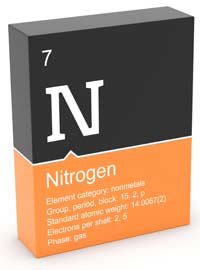
Nitrate Nitrogen. The concentration of nitrates is commonly expressed as N03-. The term "nitrate nitrogen" is used to refer to the nitrogen present which is combined in the nitrate ion. This nomenclature is used to differentiate nitrate nitrogen from nitrogen in the form of ammonia (ammonia nitrogen), from nitrogen in the form of nitrite (nitrite nitrogen), etc. The concentrations are usually expressed in milligrams per liter of nitrogen.

Many ground waters contain small amounts of nitrate nitrogen. Concentrations range from 0.1 mg/l to 3 or 4 mg/l in most areas. Amounts as high as 100 mg/l have been found, however. Nitrates may occur in both shallow and deep well supplies, but they are most common in water from shallow wells. Nitrate nitrogen can result from the seepage of water through soil containing nitrate-bearing minerals. It may also occur as the result of using certain fertilizers in the soil; however, nitrates are one of the products of decomposition of animal and human wastes. Thus, the presence of nitrates in a water supply indicates possible pollution of the water.
Nitrate nitrogen has been much publicized in recent years in relations to the problem of "blue babies." In concentrations as low as 10 to 20 mg/1 nitrate nitrogen has caused illness and even death among infants under six months of age. If such water is used for supplemental or for complete bottle feeding, it may affect the ability of the blood to carry oxygen. This oxygen starvation is called methemoglobinemia, or more commonly, the "blue baby" condition. This serious illness in infants is caused because nitrate is converted to nitrite in the higher pH conditions existing in the stomachs and intestinal tracts of infants under six months of age. Nitrite interferes with the oxygen carrying capacity of a child's or baby animal's blood. This is an actue disease in that the symptons can develop rapidly. In most cases, health deteriorates rapidly over a period of days. Symptons include shortness of breath and blueness of skin.

In the process of decomposition, raw sewage undergoes a chemical change. Among the end products is nitrate nitrogen. When nitrate nitrogen occurs, it is considered evidence of pollution either from septic tank fields, cesspools or other sewage sources. Where a ground­water is known to contain little or no nitrate nitrogen naturally, the appearance of any significant increase is a probable indication of pollution. Because of these factors, well waters containing nitrate nitrogen should be checked periodically by local or state health authorities.

The best method for treatment of large nitrate nitrogen concentrations due to human or animal wastes is prevention. Wells should be properly located and constructed in order to prevent sewage contamination. Nitrates can be removed through distillation, deionization, or reverse osmosis. Even though about 95% of ionic nitrates can be removed by reverse osmosis, non-ionic forms of nitrogen are not rejected and pass through the membrane. In commercial and industrial water supplies nitrates do not usually present serious problems.

Click to see details of Ultra Reverse Osmosis Water Filter System !
Healthy and Convenient! Our Featured Reverse Osmosis Drinking Water System

More Topics on Water Quality & Treatment:

General water treatment
Water quality defined
Hydrologic cycle of water
Meteoric water and cycle
Environmental factors of water
Age of ground water
Temperature of ground water
Water quality of surface water
Cistern water quality
Summary of water quality and the environment

Hard water explained
Hard water problems
Softened water energy savings
Hard water analysis
Hard water and soap curd
Ion exchange principles
More on water softening
Home water softener basics
Water deionization
Lime soda ash water treatment
Water softener alternatives
3 Types of basic water
TDS-Total dissolved solids
Reverse osmosis treatment
Alkalinity of water
Reverse osmosis and pH
Carbon dioxide in water
Chloride and sulfate
Fluoride in drinking water
Hydrogen sulfide in water
Nitrate/ nitrogen in water
Oxygen in drinking water
Silica in drinking water
Sodium/methane/ phenol
Disease-causing organisms
Micro-organism in water1
Micro-organism in water2
Viruses in drinking water
Bacteria in drinking water
Water disinfect methods1
Water disinfect methods2
Water disinfect-chlorine
Dechlorinating filters Q&A
Palatability of water
Turbidity of drinking water
Mechanical filtration
Multi-media (depth filters)
Color of drinking water

Self maintenance guideline for private well owners
Water pressure matters
Common water usage of a household
Public water systems users
The guardian-Safe Drinking Water Act
The correct disinfection practice
Facts on home water treatment

Experiment1-water cycle purify our drinking water
Experiment2-pollution
Experiment3-waster filtration
Experiment4-build an aquifer
Experiment5-pollution control by using carbon
Experiment6-chlorination for disinfection
Experiment7-organisms in source water

Lead in your drinking water?
Arsenic in your drinking water
Read the bottled water label
Common bottled water treatment II
State certified lab for water testing
Earth water distribution
A natural setting for fish
Toxic algae treatment

Backcountry water drinking
Cl2 resistant pathogens
Common contaminants in the water system
Microbes & water quality
The origination of modern water filtration
Define Spring water & the safety
Water quality issues in Europe
Seawater drinkable?


How do water treatment plants work
How does Hydrology affect water
Barriers to quality water source management
Enough water for the future?
Water & agriculture..big connection
Climate change & the water
Negotiation of Water Rights
How pollution affect water?
How water prices were set?
How does Bay-scaping affect water
Nutrient management laws for water
Source Water Assessment Program
Water treatment techniques in the 1960's
Water treatment techniques in the 70's & 80's

How & Why Hazardous Events are monitored
America's ten most polluted rivers
Global Warming affects river & lakes
Define "Safe Water"
Potentially unsafe water in U.S. cities
Drink well water? Watershed management
Common microbes & the problems
To filter or purify water
The physical parameters of good water quality
The chemical parameters of good water quality
How does dissolved oxygen affect water quality
Micro meida filtration: An alternative to membrane filtration
The "hidden" dangers of water

Biological oxygen demand affect water quality
Coliform bacteria affect water quality
What do Nitrate & Phosphate do?
Nitrogen level affects a long way
Stone Fly & May Flies show the water quality
Good water quality need adequate phosphorous level
What is a healthy watershed
The role of biological in watershed
Rainwater...future drinking water?
Eco-technology..the future of water treatment
Emerging issues of water & infectious diseases

Dirty water or bombs-Iraq
Terrorist attacks on water supplies
Hygiene & your water
Eutrophication in water
Explained Solar Water Disinfection
Perchlorate removal
The methods of selecting the best home water treatement
The health effects from Pesticides
How is water filtered in natural
Pharmaceuticals & Hormones in the water
Disease resistant DNA in the water
Anti-microbials & the danger to your water
The truth:How safe is American water


Introuction to water chemistry
Water chemistry-Atom & Molecules
Nuclear atom-Protons, Neutrons, & Electrons
Basic atom in Flourine, Magnesium, & Chlorine
The Isotopes of Hydrogen
Electrons in chemical interaction
Ionic reaction in natural
Remove Ionic impurities from water
Chemical term explained-Valence

Water problems- Iron
Introduce the state of Iron
Water problems- Manganese
Removal of Iron & Manganese from water
Ion exchange explained
An effective treatment for medium concentrations of Iron
Sequestration-Polyphosphate treatement explained
Chemical solution feeders explained
Water problems-Corrosion

Causes of corrosion
Corrosion on the common household used metals
Causes of corrosion explained II
The methods for controlling corrosion problem
Soft water to softened water
The needs for water testing
Correctly prepare water sample for testing
How to interpret water analysis I
How to interpret water analysis II
How to interpret water analysis III
How to interpret water analysis IV

How to choose the right plumber to install water softener
Recommended installation procedures-water softener
Installation equipments for the traditional water softener
Water softener installed in rural areas
Water softener installation-solution for pressure drop
Solution for pressure drop II- water softener


We are proud to be the authoritative website of Information on water quality solutions, water purification and treatment. We provide the most heavy duty, professional water filtering products to remove contaminants caused by industrial and agricultural water pollution and contamination to provide safe and pure drinking water. Many of our top quality home reverse osmosis drinking water systems, whole house water filters, salt-free water softeners, and electronic water softeners/conditioners are currently on sale.

= Products of Superior Performance and Dependability APEC Reverse Osmosis Made In USA
Home of APEC Water Filters
Reverse Osmosis Products

RO Replacement Filters & Parts
Whole House Water Filters/Conditoners
Saltless Water Softeners
Classic Water Softeners

Electronic Water Softeners/Conditioners
Product categories list
Frequently Asked Questions
Reverse Osmosis Technical Center
Learn the Truths About Our Drinking Water
Contaminant Fact Sheets
Water Can Cure Diseases
Water And Our Health
Top Water News

Contact APEC
Current Promotions
Our Reviews
About APEC
Refer & Get Cash
Warranty